













Purposes & Uses of AGSO Metarhizium
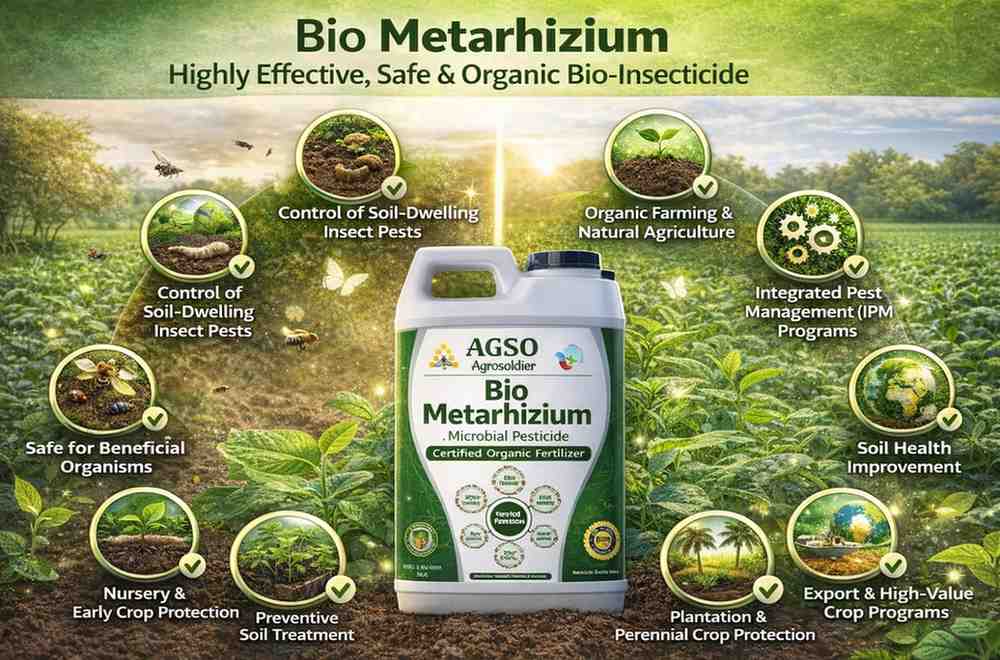
AGSO Metarhizium is suitable for Control of Soil-Dwelling Insect Pests 🐛,Organic Farming & Natural Agriculture 🌱, Integrated Pest Management (IPM) Programs 🔄, Soil Health Improvement 🌍, Nursery & Early Crop Protection 🌱, Preventive Soil Treatment 🛡️, Plantation & Perennial Crop Protection 🌴, Safe for Beneficial Organisms 🐝, Export & High-Value Crop Programs 🌍.
How AGSO Metarhizium Acts on Different Insect Pests
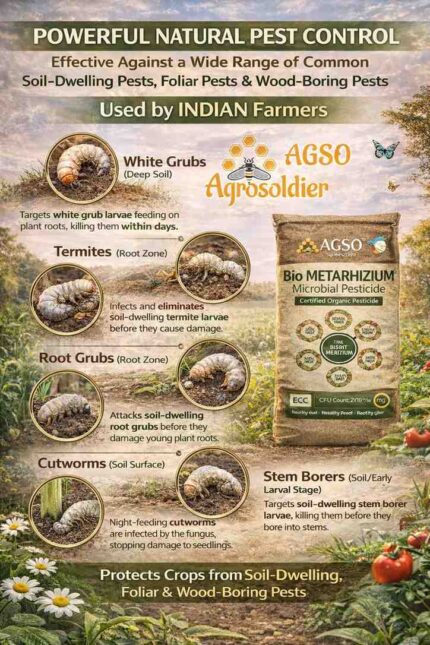
Effective against wide range of common Soil-Dwelling Pests, Foliar Pests, Wood-Boring Pests.
 White Grubs (Holotrichia spp., Anomala spp.) : pest lives: Deep soil (5–30 cm), feeds on plant roots. How AGSO Metarhizium acts: Spores remain active in soil, White grub larvae crawl through treated soil, Spores attach to soft cuticle of larvae, Fungus penetrates and spreads rapidly inside fat-rich body, Larva stops feeding within 2–3 days, Death occurs in 4–6 days.
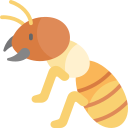 Termites (Odontotermes spp., Microtermes spp.) : pests that inhabit soil, creating underground galleries and residing in the root zone. The AGSO Metarhizium Pesticide operates by having its spores attach to the cuticle of termite larvae. Due to the larvae's thin body wall, the spores can easily penetrate, leading to the death of the larvae before they reach the damaging stages of their life cycle.
 Root Grubs : Root grubs are pests that inhabit the root zone and are similar to white grubs, though they are smaller in size. The AGSO Metarhizium operates by having its spores attach to the cuticle of the larvae, easily penetrating their thin body wall. This leads to the death of the larvae before they can reach stages that cause significant damage. The presence of Metarhizium is particularly beneficial in protecting young roots, making it an ideal solution for nurseries and the every stages of crop development.
 Cutworms (Agrotis spp.) : Pests typically inhabit the soil surface and shallow layers, where they tend to cut seedlings during the night. Metarhizium operates by having larvae seek refuge in treated soil during the day, where spores penetrate their bodies. This infection halts their feeding within 24 to 48 hours, ultimately leading to their demise within the soil. It is crucial to apply this treatment before a significant infestation occurs, as it effectively reduces seedling mortality and prevents the re-emergence of pests.
 Stem Borers (Soil / Early Larval Stage) : Pest habitats are primarily located near the soil, where eggs hatch and larvae subsequently enter the base of the stem. The fungus Metarhizium plays a crucial role in controlling these pests by infecting newly hatched larvae before they penetrate the stem. Spores of the fungus attach to the larvae as they crawl on the soil surface, leading to their death prior to boring into the plant. However, the effectiveness of Metarhizium diminishes once the larvae have burrowed deeply into the stem. This biological control method is beneficial in preventing early infestations and curbing the population growth of borers in the field.
 Thrips (Soil Pupal Stage) : Pest habitats include adult Thrips residing on leaves, while their pupae develop in the soil. The AGSO Metarhizium operates by infecting these immobile pupae, effectively preventing the emergence of adult thrips and disrupting their life cycle. The long-term impact of this method is significant, as it contributes to sustained control of Thrips populations in agricultural settings.
Weevils (Root & Stem Weevils) : Specifically root and stem weevils, primarily inhabit the soil or the base of stems, where their larvae reside. The AGSO Metarhizium plays a crucial role in controlling these pests by infecting the larvae during soil disturbances. Once infected, the fungus proliferates rapidly within the larvae, effectively halting their development into pupae and preventing them from maturing into adults. Notable examples of these pests include the banana rhizome weevil and the sugarcane root weevil.
 Grasshoppers (Nymphs) : Grasshopper primarily inhabit the soil and the surface of plants during their early developmental stages. The AGSO Metarhizium infects these nymphs when they come into contact with its spores while hopping or feeding. Once infected, the fungus spreads through the nymph's body wall, leading to a significant reduction in feeding behavior before death occurs.
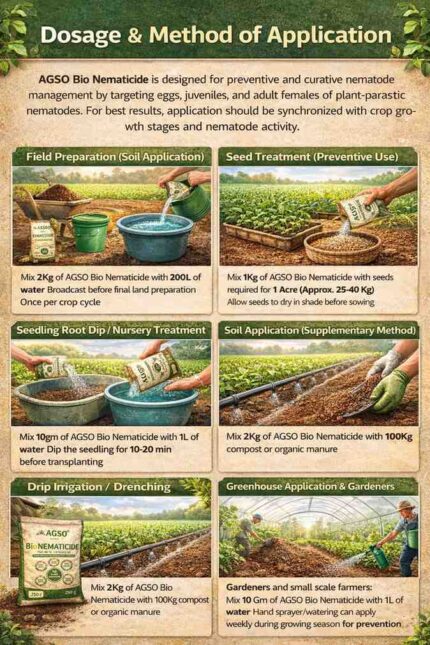
Stage & Method of Application
AGSO Bio Metarhizium is designed for preventive and curative nematode management by targeting eggs, juveniles, and adult females of plant-parasitic nematodes. For best results, application should be synchronized with crop growth stages and nematode activity.
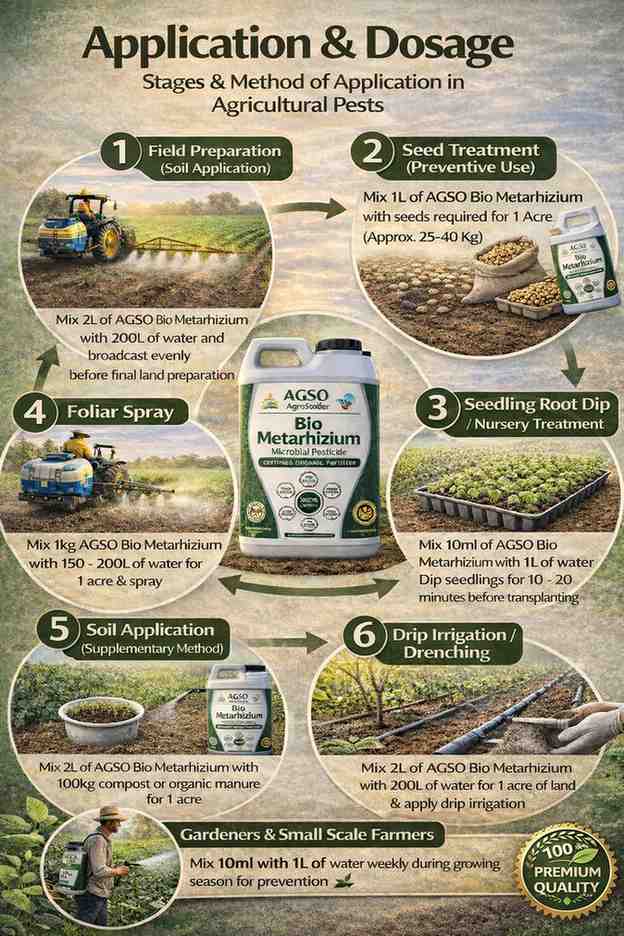
 Field Preparation (Soil Application): Mix 2L of AGSO Bio Metarhizium with 200 L of water and Broadcast evenly across the field before final land preparation, Once per crop cycle. Early application gives better control of nematode eggs and juveniles.
 Seed Treatment (Preventive Use) : Mix 1L of AGSO Bio Metarhizium with seeds required for 1 Acre (Approx25-40 Kg). Allow seeds to dry in shade before Sowing, This Provides early protection against soil pests.
 Seedling Root Dip / Nursery Treatment : Mix 10 ml of AGSO Bio Metarhizium with 1L of water. Dip the seedling for 10-20 minutes before transplanting.
 Foliar Spray: Mix 1kg AGSO Bio Metarhizium with 150 to 200 Liter of water for one acer. Spray ensuring thorough coverage on both leaf sides (dense spray).
 Soil Application (Supplementary Method) : Soil Application: Mix 2L of AGSO Bio Metarhizium with 100 Kg compost or organic manure, broadcast or apply near the root zone.
 Drip Irrigation / Drenching : Mix 2L of AGSO Bio Metarhizium with 200L of water. Drip irrigation 1 acre of land.
 Greenhouse Application: Mix 2L of AGSO Bio Metarhizium with 100 Kg compost or organic manure, broadcast or apply near the root zone.
 Gardeners and small scale farmers : 10ML of AGSO Bio Metarhizium with 1L of water. Hand sprayer / watering can apply weekly during growing season for prevention.
Application Tips for Maximum Effectiveness
 Timing: Apply early in the morning or late afternoon when temperatures are moderate.
 Weather Conditions: Avoid application during hot, dry conditions or when rain is expected within 4-6 hours.
 Early Intervention: Begin applications at the first sign of pest presence for preventative control.
 Repeat Applications: For heavy infestations, make 2-3 consecutive applications at 35 to 40 days intervals.











Reviews
There are no reviews yet.