

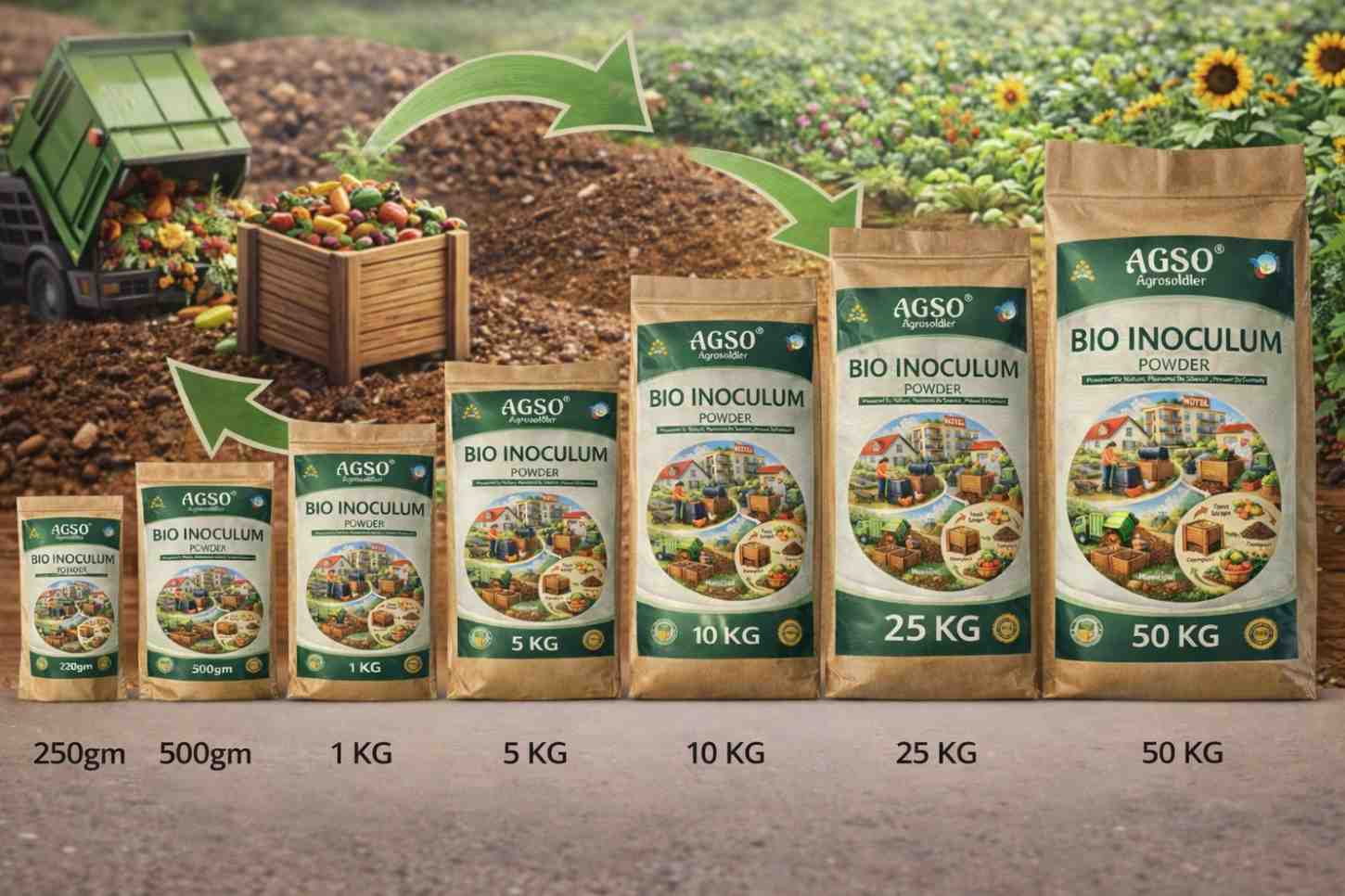



Below is a clear, practical, step-by-step application guide for AGSO Bio Inoculum
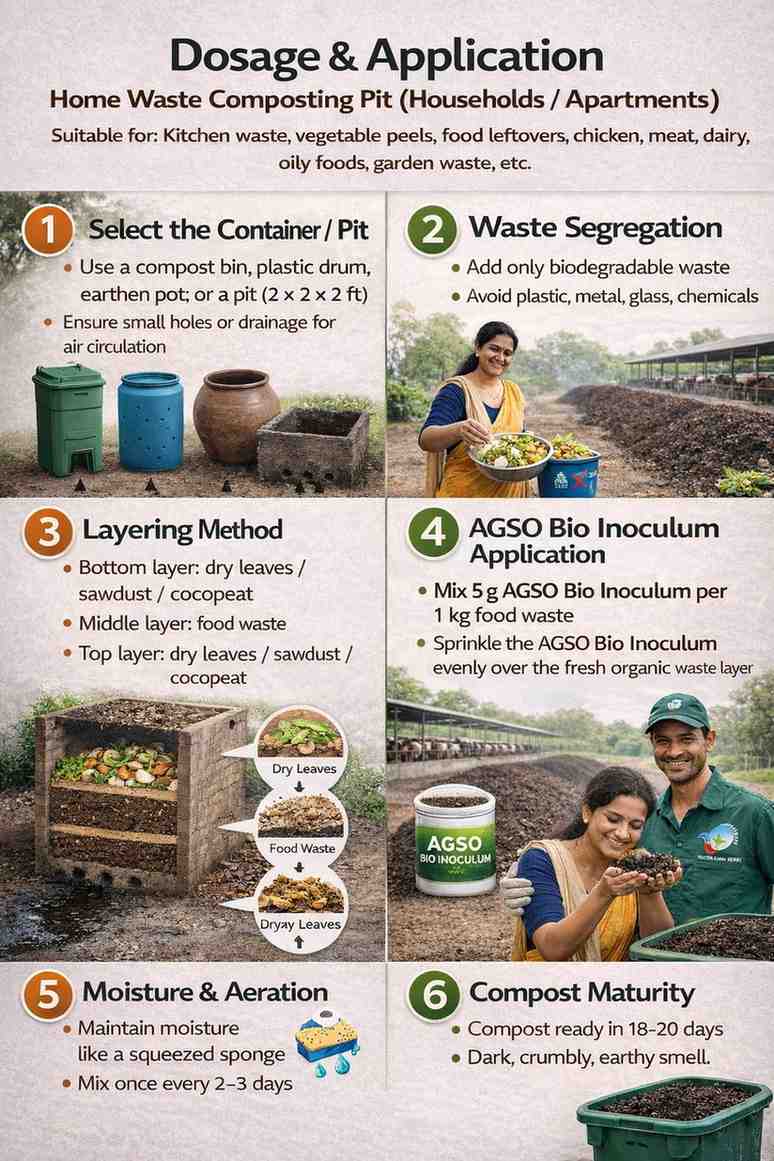
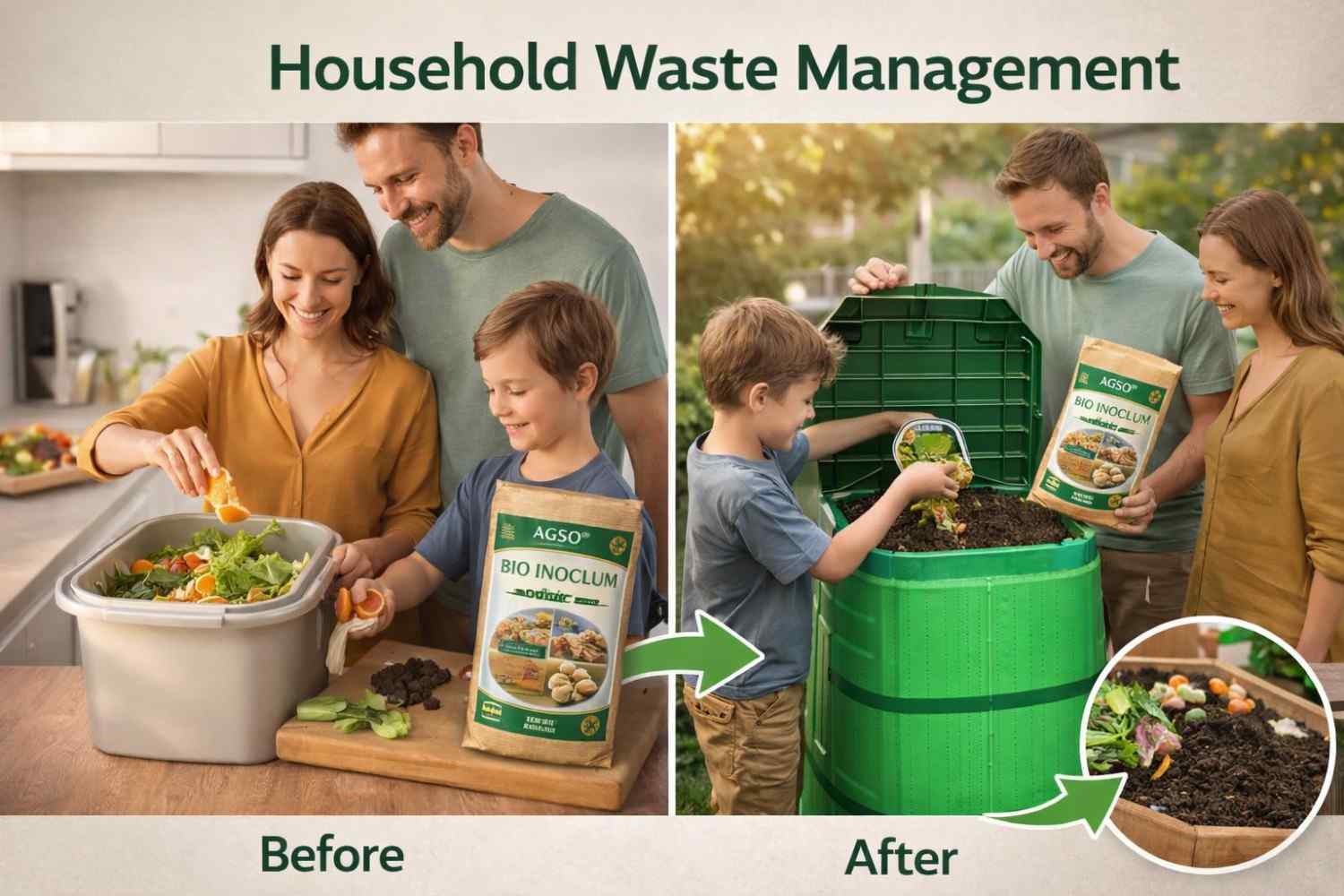
Home Waste Composting Pit (Households / Apartments)
Suitable for: Kitchen waste, vegetable peels, food leftovers, chicken, meat, dairy, oily foods , garden waste, etc.
Step 1: Select the Container / Pit.
Use a compost bin, plastic drum, earthen pot, or a pit (2 × 2 × 2 ft)
Ensure small holes or drainage for air circulation
Step 2: Waste Segregation
Add only biodegradable waste
Avoid plastic, metal, glass, chemicals
Step 3: Layering Method
Bottom layer: dry leaves / sawdust / cocopeat
Middle layer: food waste
Top layer: dry leaves / sawdust / cocopeat
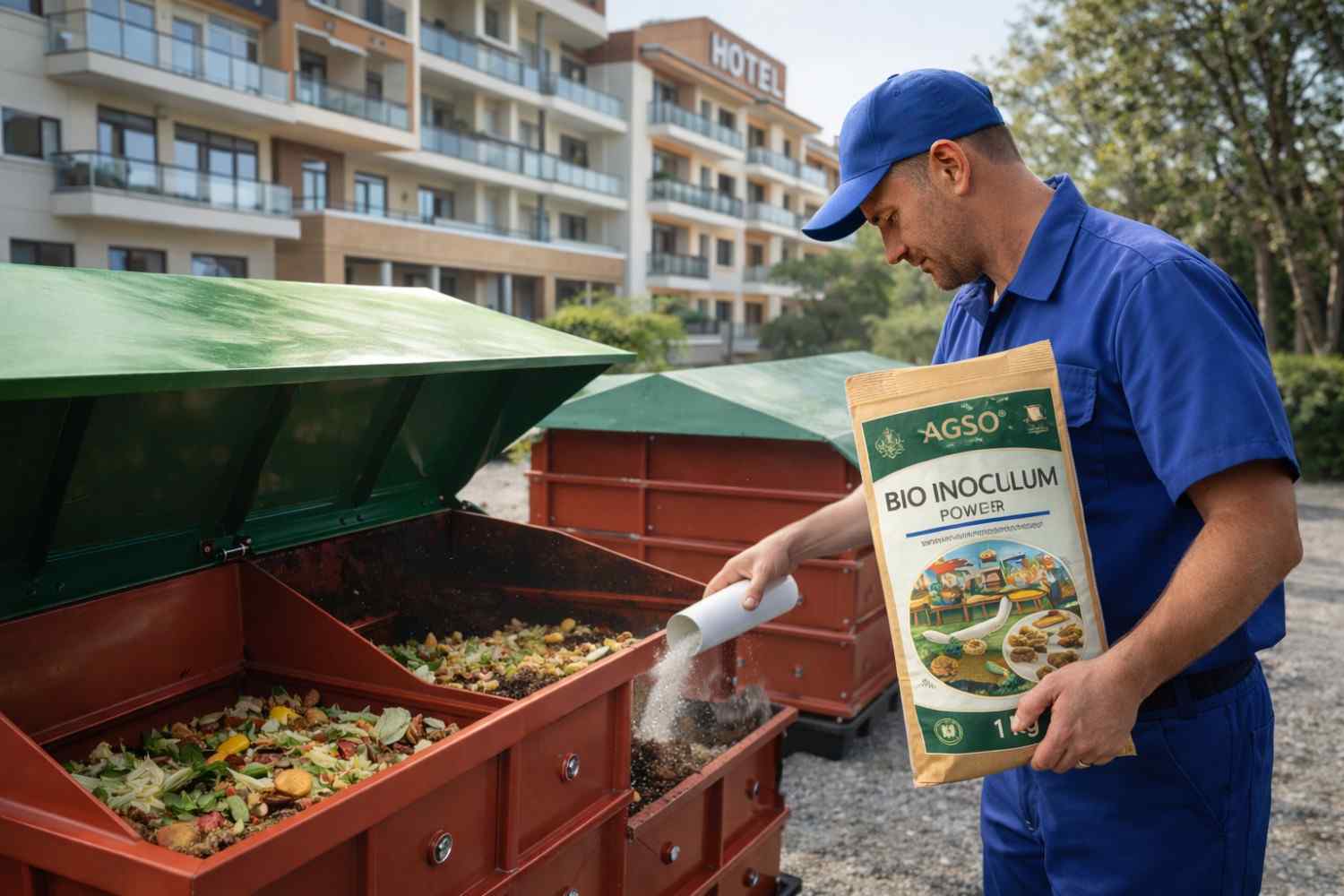
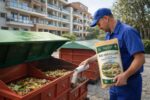
Step 4: AGSO Bio Inoculum Application
Mix 5 g AGSO Bio Inoculum per 1 kg food waste, Sprinkle the AGSO Bio Inoculum evenly over the fresh organic waste layer.
Step 5: Moisture & Aeration
Maintain moisture like a squeezed sponge
Mix once every 2–3 days
Step 6: Compost Maturity
Compost ready in 18–20 days
Dark, crumbly, earthy smell.
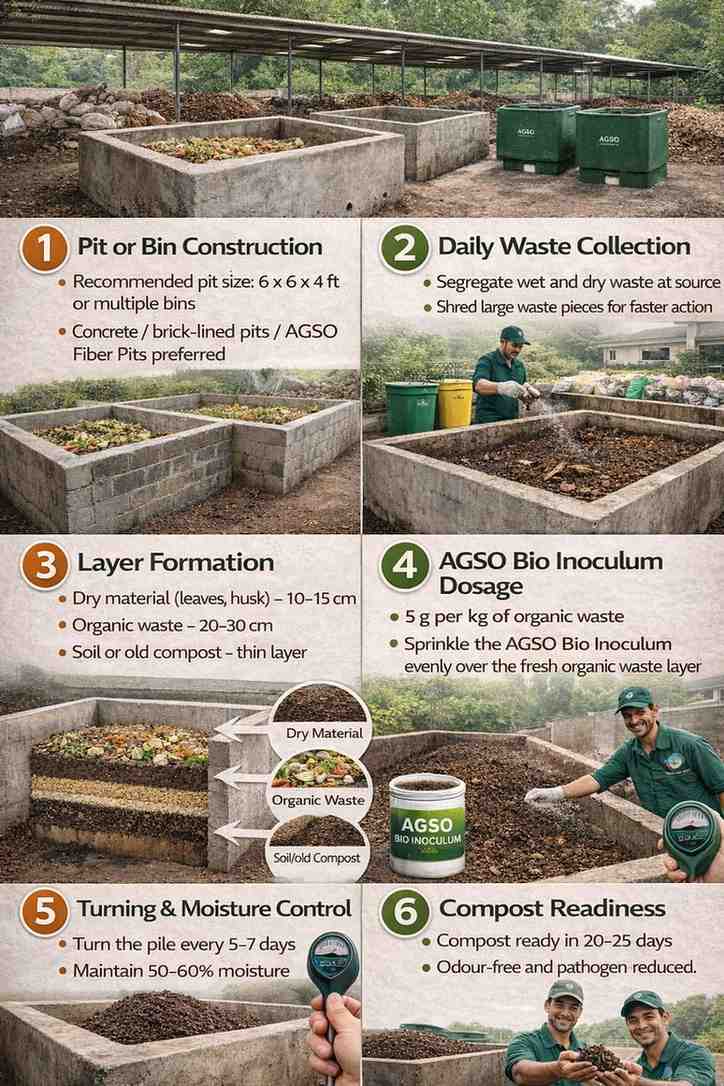
Medium-Level Composting Pit
(Hotels, Convention Centres, Schools, Offices, Wedding Halls)
Suitable for: Kitchen waste, vegetable peels, food leftovers, chicken, meat, dairy, oily foods , garden waste, etc.
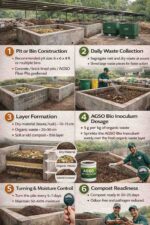
Step 1: Pit or Bin Construction
Recommended pit size: 6 × 6 × 4 ft or multiple bins
Concrete / brick-lined pits / AGSO Fiber Pits preferred
Step 2: Daily Waste Collection
Segregate wet and dry waste at source
Shred large waste pieces for faster action
Step 3: Layer Formation
Dry material (leaves, husk) – 10–15 cm
Organic waste – 20–30 cm
Soil or old compost – thin layer
Step 4: AGSO Bio Inoculum Dosage
5 g per kg of organic waste, Sprinkle the AGSO Bio Inoculum evenly over the fresh organic waste layer.
Step 5: Turning & Moisture Control
Turn the pile every 5–7 days
Maintain 50–60% moisture
Step 6: Compost Readiness
Compost ready in 20–25 days
Odour-free and pathogen-reduced.
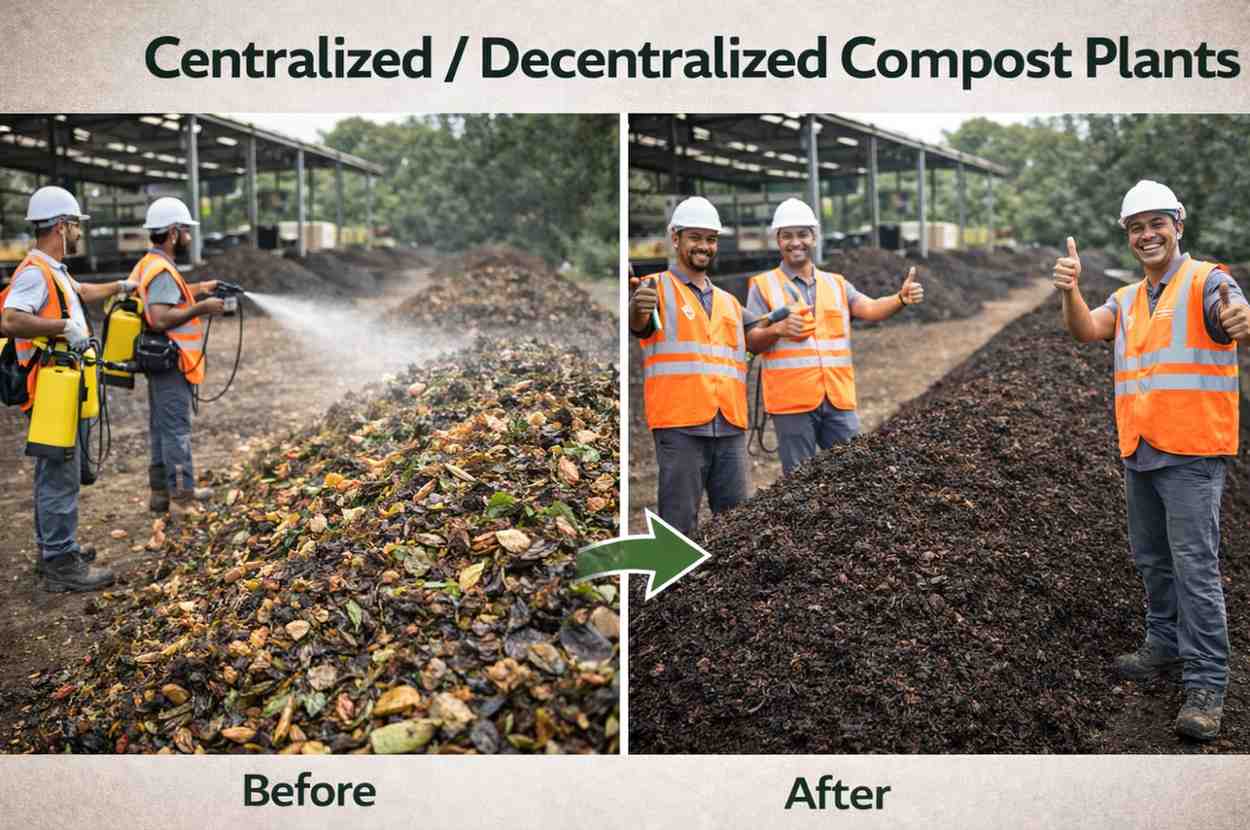
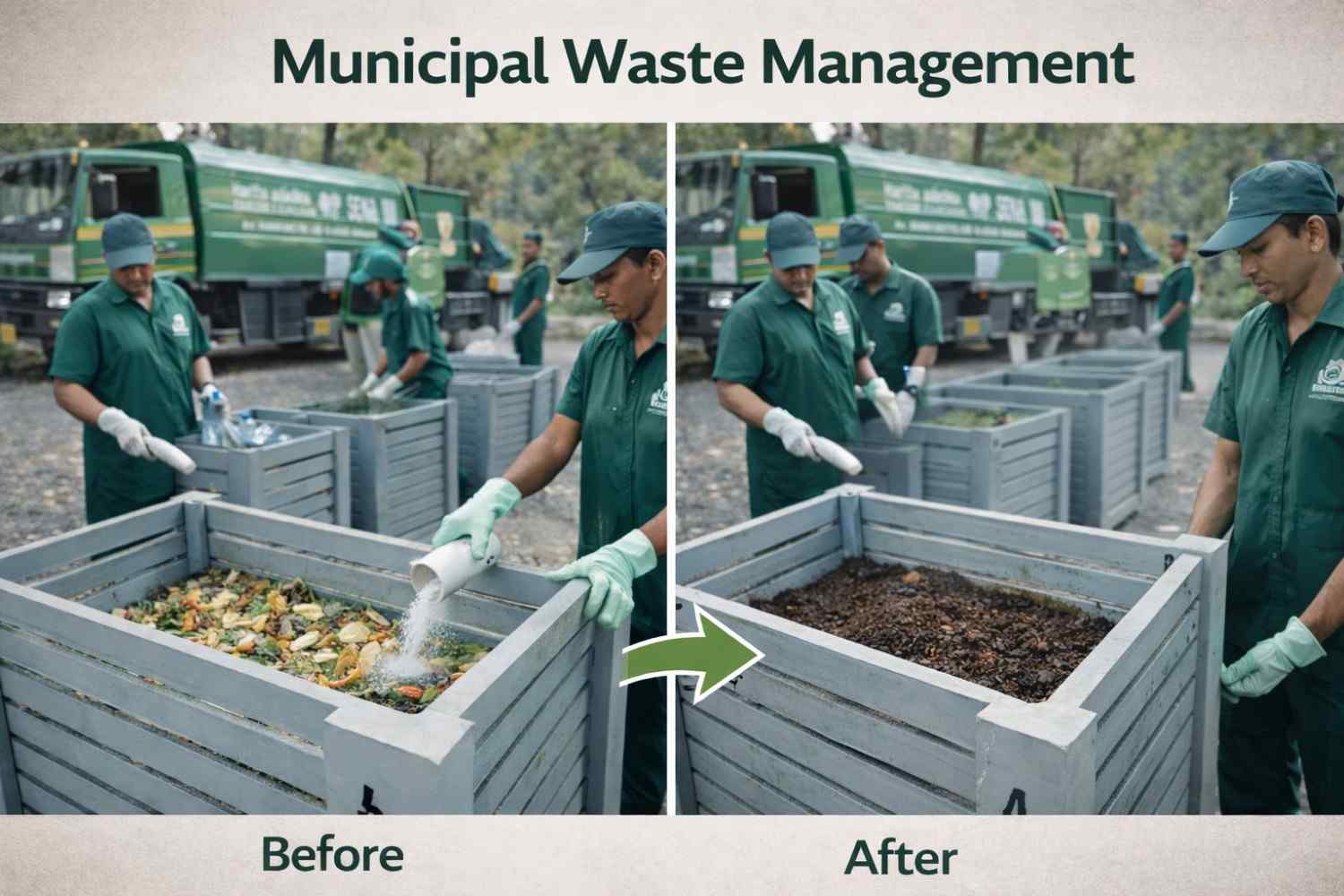
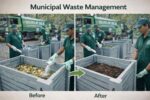
Large-Scale Composting Pits
(Municipal Waste, Centralized Waste Management Units)
Suitable for: Segregated organic municipal solid waste
Step 1: Waste Pre-treatment
Mandatory segregation at source
Shredding improves microbial contact
Step 2: Windrow / Pit Formation
Windrow size: 1.5 m height × 3 m width
Length as per waste volume
Step 3: Inoculum Preparation
Apply 5 g AGSO Bio Inoculum per kg biodegradable waste
Step 4: Uniform Application
- Lightly mix the inoculum into the compost material.
Step 5: Turning Schedule
First turning: Day 5
Subsequent turning: Every 2 days.
- Else to ensure adequate air circulation in the pit, it is advisable to arrange for an air pump.
- Optimal composting temperature is between 120-150°F (49-65°C). The microbial activity will generate heat naturally.
Step 6: Compost Stabilization
Compost ready in 20–30 days
Reduced volume, stable organic manure
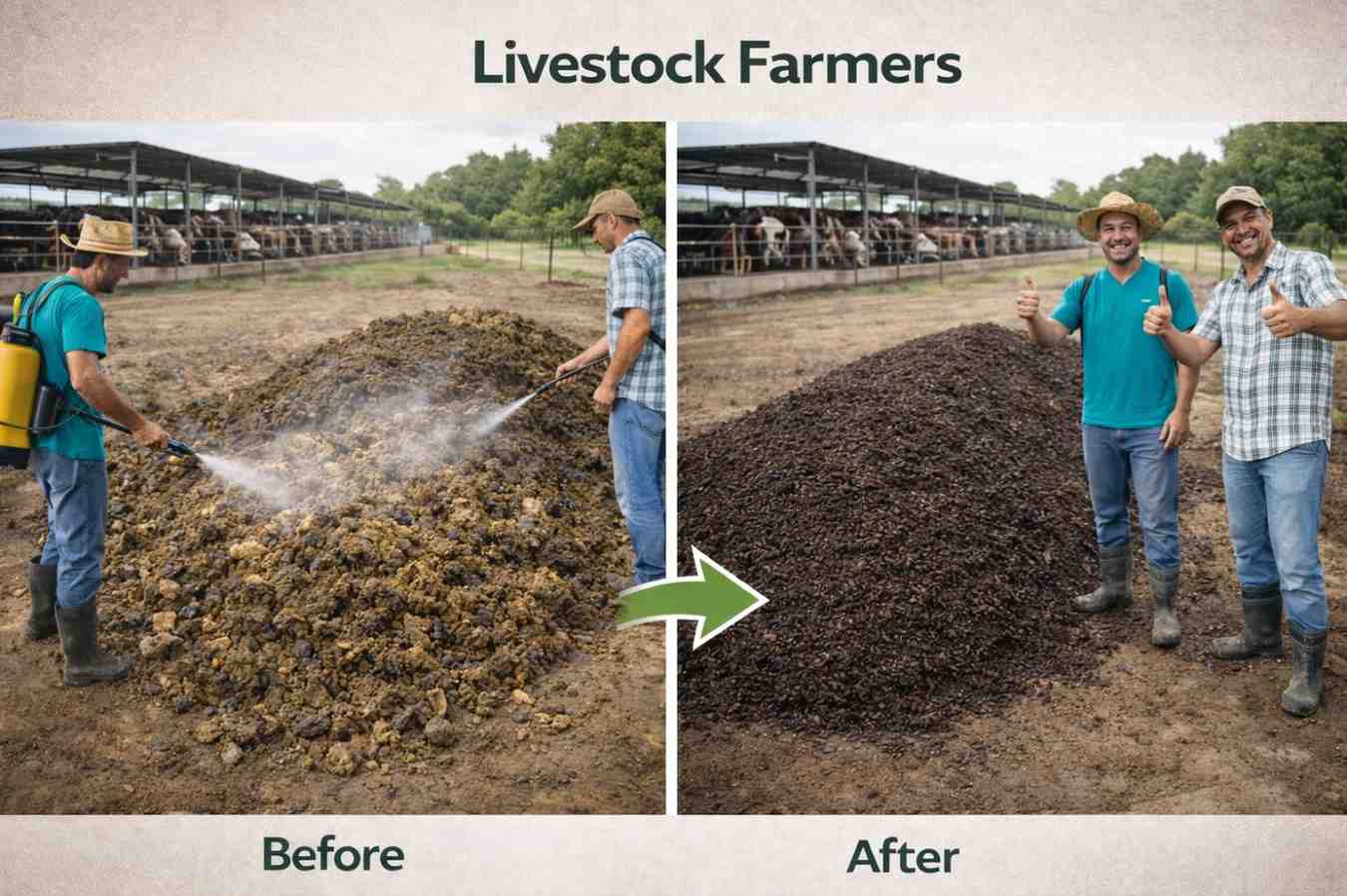
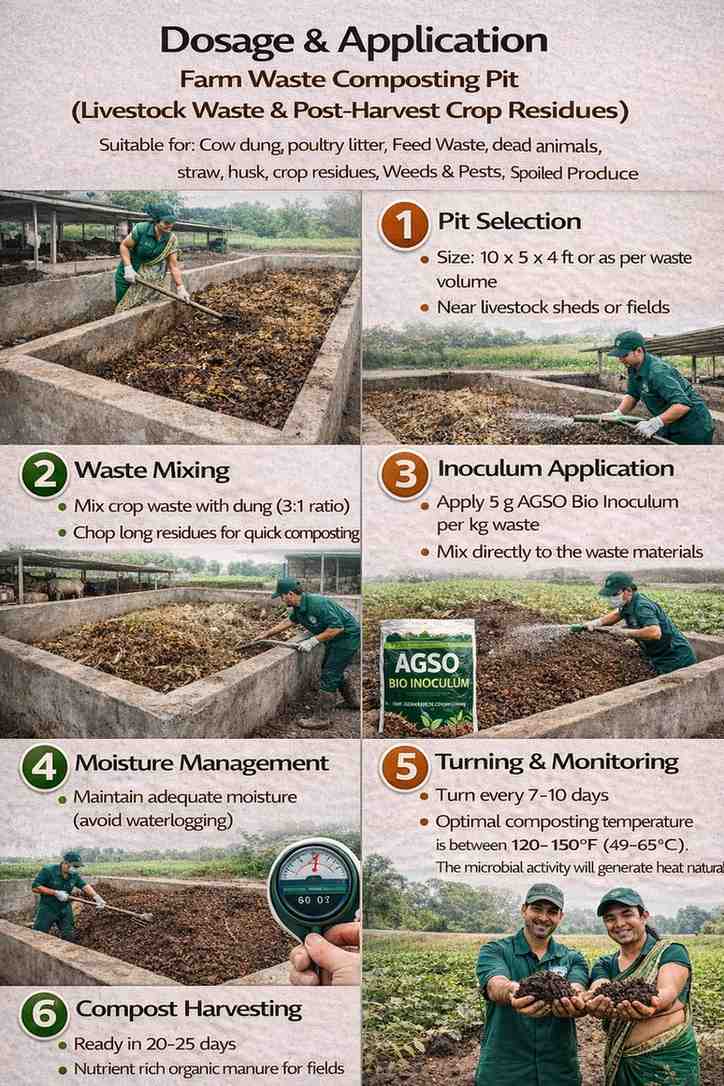
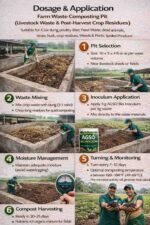
Farm Waste Composting Pit
(Livestock Waste & Post-Harvest Crop Residues)
Suitable for: Cow dung, poultry litter, Feed Waste, dead animals, straw, husk, crop residues, Weeds & Pests, Spoiled Produce.
Step 1: Pit Selection
Size: 10 × 5 × 4 ft or as per waste volume
Near livestock sheds or fields
Step 2: Waste Mixing
Mix crop waste with dung (3:1 ratio)
Chop long residues for quick composting
Step 3: Inoculum Application
Apply 5 g AGSO Bio Inoculum per kg waste
Mix directly to the waste materials.
Step 4: Moisture Management
Maintain adequate moisture (avoid waterlogging)
Step 5: Turning & Monitoring
Turn every 7–10 days
Optimal composting temperature is between 120-150°F (49-65°C). The microbial activity will generate heat naturally.
Step 6: Compost Harvesting
Ready in 20–25 days
Nutrient-rich organic manure for fields





Reviews
There are no reviews yet.